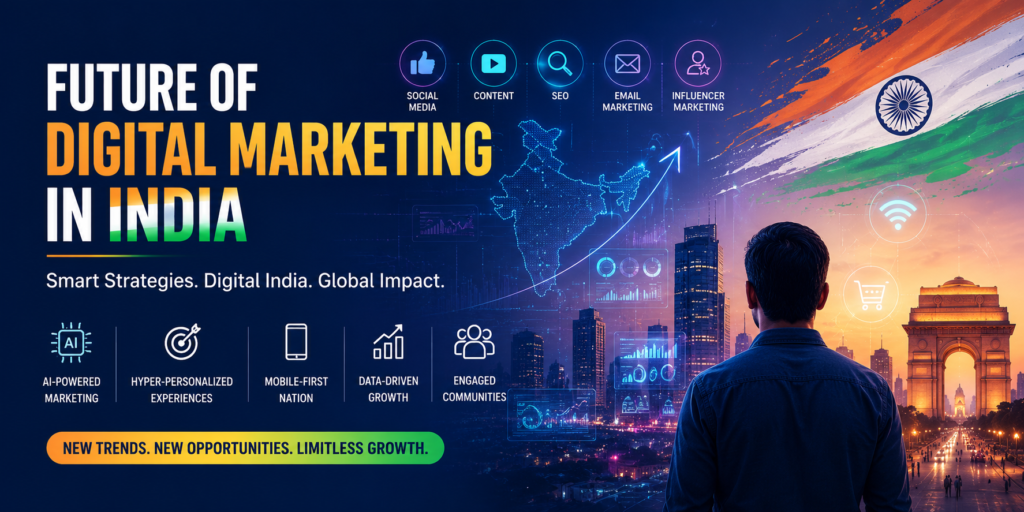
The Future of Digital Marketing in India: Trends, Opportunities, and What Lies Ahead
Introduction
India is experiencing one of the world’s fastest digital transformations. With over a billion internet users, affordable smartphones, widespread 5G connectivity, and a booming e-commerce ecosystem, digital marketing has become the backbone of modern business growth. From startups and small businesses to multinational corporations, organizations are increasingly investing in digital channels to connect with consumers in more personalized and meaningful ways.
As we move through 2026, technologies such as Artificial Intelligence (AI), voice search, automation, and data analytics are reshaping how brands engage with audiences. The future of digital marketing in India is no longer just about being online—it is about delivering smarter, faster, and more personalized customer experiences.
Why Digital Marketing is Growing Rapidly in India
India’s digital economy has expanded significantly over the past decade. Several factors have contributed to this growth:
- Increasing internet penetration across urban and rural regions
- Affordable smartphones and mobile data
- Expansion of online shopping and digital payments
- Government initiatives supporting digital transformation
- Growing adoption of social media platforms
- Rising number of startups and digital-first businesses
Today’s consumers rely on the internet to discover products, compare prices, read reviews, and make purchasing decisions. As a result, businesses are shifting larger portions of their marketing budgets toward digital platforms.
Key Trends Shaping the Future of Digital Marketing in India
1. Artificial Intelligence Will Drive Smarter Marketing
Artificial Intelligence is transforming the way businesses create campaigns and engage customers. AI-powered tools can analyze customer behavior, automate repetitive tasks, generate content, optimize advertisements, and predict future buying patterns.
Businesses are using AI for:
- Personalized product recommendations
- Customer segmentation
- Marketing automation
- Chatbots and virtual assistants
- Predictive analytics
- AI-generated content
AI enables marketers to make faster, data-driven decisions while improving campaign performance.
2. Voice Search Will Continue to Rise
More Indians are using voice assistants to search for products, services, and local businesses. Voice searches are becoming increasingly common in regional languages, making multilingual content more important than ever.
Businesses should optimize content by:
- Using conversational language
- Answering common customer questions
- Creating FAQ pages
- Targeting long-tail keywords
- Improving local SEO
Voice search optimization will become a critical component of future digital marketing strategies.
3. Regional Language Content Will Dominate
India is a multilingual nation with hundreds of languages and dialects. Consumers increasingly prefer content in their native language.
Brands that create content in languages such as Hindi, Tamil, Telugu, Malayalam, Bengali, Kannada, and Marathi can connect with larger audiences and build stronger customer relationships.
Localized content improves trust, engagement, and conversion rates.
4. Short-Form Video Content Will Lead Engagement
Video continues to dominate digital marketing, especially among younger audiences. Platforms like Instagram Reels, YouTube Shorts, and Facebook Videos have transformed how brands communicate.
Short videos are highly effective for:
- Product demonstrations
- Brand storytelling
- Educational content
- Customer testimonials
- Behind-the-scenes content
Businesses investing in creative video marketing will have a significant competitive advantage.
5. Influencer Marketing Will Become More Authentic
Consumers trust recommendations from creators they follow. Instead of partnering only with celebrities, brands are increasingly collaborating with micro and nano influencers who have highly engaged audiences.
These partnerships often deliver:
- Higher engagement
- Better audience trust
- Improved conversion rates
- Cost-effective campaigns
Authenticity will be the key to successful influencer marketing.
6. Hyper-Personalization Will Improve Customer Experience
Modern consumers expect personalized experiences across every digital touchpoint.
Businesses will increasingly use customer data to deliver:
- Personalized email campaigns
- Customized product recommendations
- Dynamic website content
- Personalized advertisements
- Tailored shopping experiences
Personalization enhances customer satisfaction while increasing sales and loyalty.
7. Social Commerce Will Continue to Expand
Social media is evolving beyond communication into a powerful shopping platform. Consumers can now discover, evaluate, and purchase products without leaving their favorite apps.
Businesses will benefit by:
- Creating shoppable posts
- Hosting live product demonstrations
- Collaborating with creators
- Offering seamless in-app purchases
Social commerce will become a major revenue channel for Indian businesses.
8. Data Privacy Will Shape Marketing Strategies
Consumers are becoming more aware of how their personal information is collected and used. Businesses that prioritize transparency, secure data practices, and customer consent will build stronger trust and long-term relationships.
Ethical marketing is no longer optional—it is a competitive advantage.
Emerging Career Opportunities
As digital marketing grows, demand for skilled professionals continues to rise. Some of the fastest-growing career paths include:
- SEO Specialist
- AI Marketing Specialist
- Content Strategist
- Performance Marketing Manager
- Social Media Manager
- Marketing Automation Expert
- Data Analyst
- Video Marketing Specialist
- Influencer Marketing Manager
- Email Marketing Specialist
Digital marketing offers excellent career opportunities for students, freelancers, entrepreneurs, and professionals looking to upskill.
Challenges Businesses Must Prepare For
Despite its growth, digital marketing in India also faces several challenges:
- Rapidly changing algorithms
- Increasing competition
- Rising advertising costs
- Data privacy regulations
- AI-generated content saturation
- Maintaining customer trust
Businesses that continuously learn, adapt, and innovate will be best positioned for long-term success.
How Businesses Can Prepare for the Future
To stay ahead of the competition, companies should:
- Invest in AI-powered marketing tools.
- Focus on high-quality, user-first content.
- Optimize for voice and AI-powered search.
- Create multilingual content for regional audiences.
- Strengthen mobile-first experiences.
- Use analytics to guide marketing decisions.
- Build authentic customer relationships.
- Stay updated with emerging technologies and trends.
Future-ready businesses will combine technology with creativity to deliver exceptional customer experiences.
Conclusion
The future of digital marketing in India is bright, innovative, and full of opportunities. As AI, automation, voice search, social commerce, and personalized experiences continue to evolve, businesses must embrace new technologies while keeping customer needs at the center of every strategy.
Companies that invest in quality content, ethical marketing practices, and data-driven decision-making will be well-positioned to thrive in India’s rapidly expanding digital economy. In the years ahead, success will belong to brands that are agile, customer-focused, and ready to adapt to the ever-changing digital landscape.